
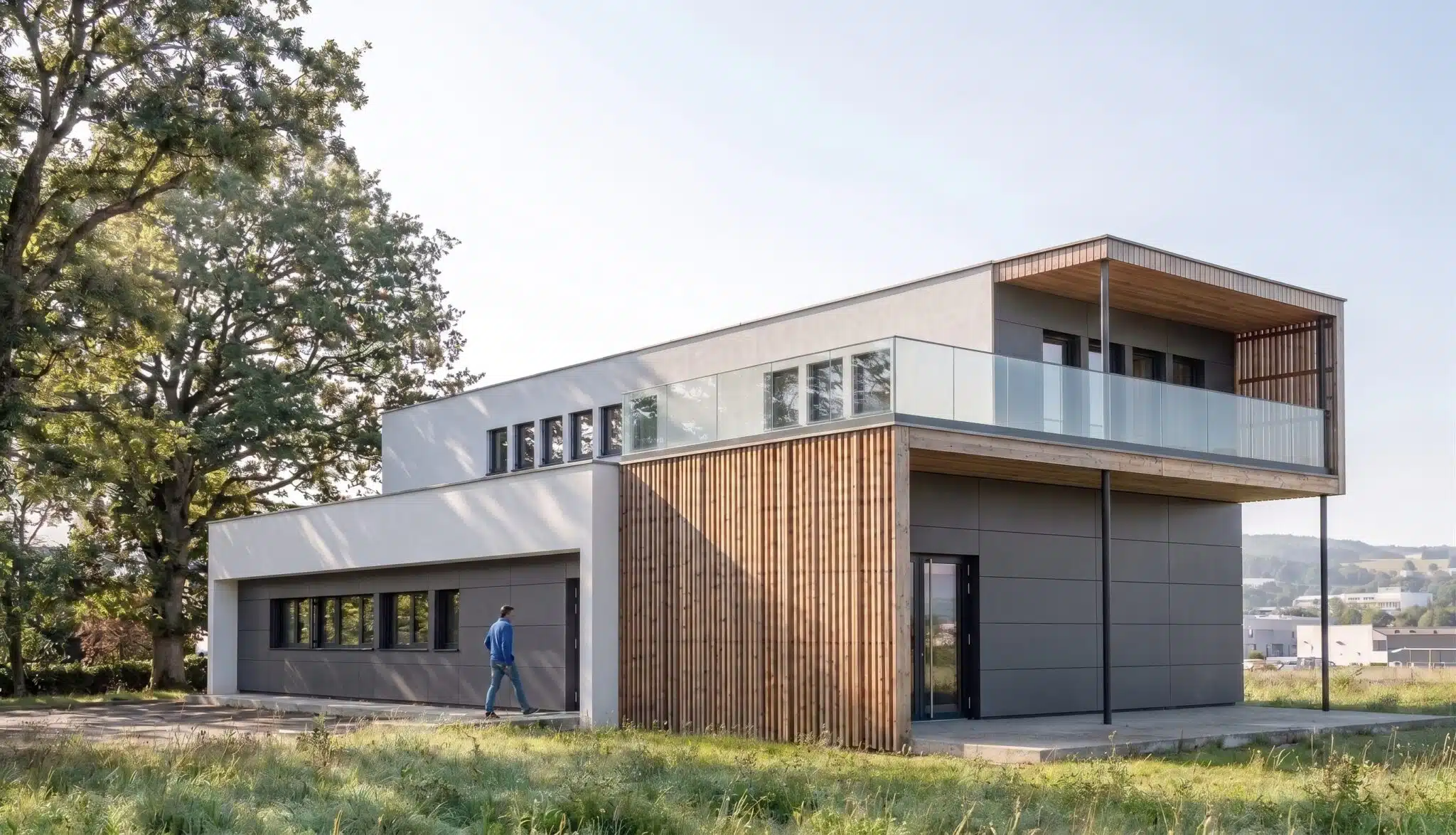
Architect Jean Julien-Laferrière offers a wide range of architectural styles, which he skillfully adapts to regional contexts, drawing on his extensive experience designing houses and other buildings throughout France.
MR. EOCHE
Design of venues for public-facing services (hospitality, restaurants, healthcare, etc.) and activity facilities (equestrian centres, leisure, cultural venues, etc.).
Architect Jean Julien-Laferrière offers a wide range of architectural styles, which he skillfully adapts to regional contexts, drawing on his extensive experience designing houses and other buildings throughout France.
MR. EOCHE
From the French Riviera to the Alpine peaks, discover the impact of our sustainable structures.
Create spaces for lasting and memorable experiences.
LET'S TALK ABOUT YOUR PROJECTWe design buildings intended for public use or a wide range of activities, including hotels, restaurants, guesthouses, wellness facilities, healthcare establishments, equestrian centres, sports and leisure facilities, cultural venues, tourism buildings, multi-purpose halls, and reception spaces. Each project is custom-designed to suit its purpose, environment, and the specific needs of its operator.
Yes. Timber buildings fully comply with the regulations governing public buildings. When designed in accordance with current standards, they provide excellent performance in terms of fire safety, acoustics, thermal comfort, and long-term durability.
Absolutely. We favour a hybrid-material approach whenever it best serves the project. Timber can be combined with stone, concrete, brick, or steel to take advantage of the unique strengths of each material. This complementary approach addresses technical, structural, heritage, and landscape requirements while creating a contemporary architectural identity.