
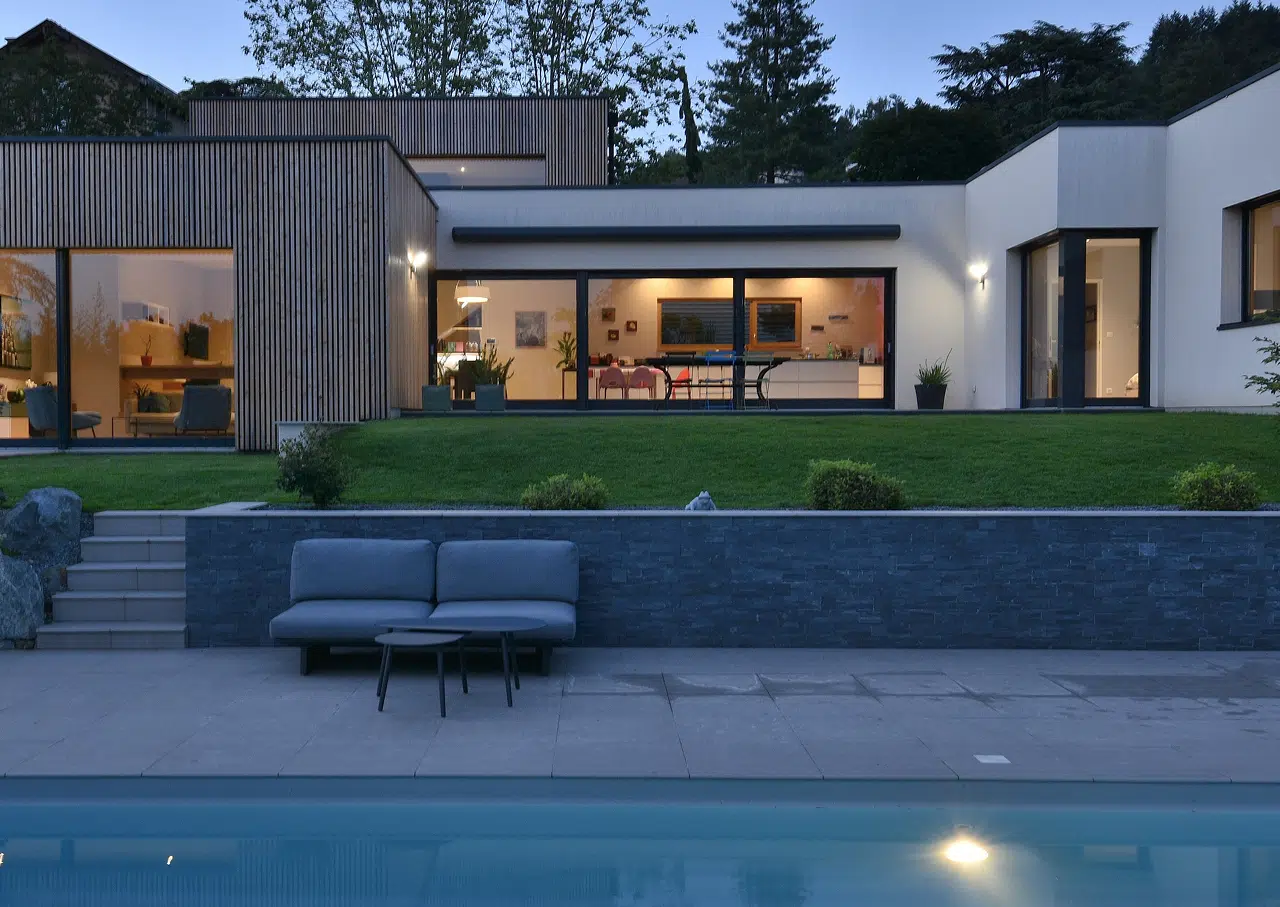
Mixed timber-masonry construction: A hybrid building approach that combines strength, comfort, and energy efficiency.
Combining materials: An approach that addresses today's challenges of performance and landscape integration.
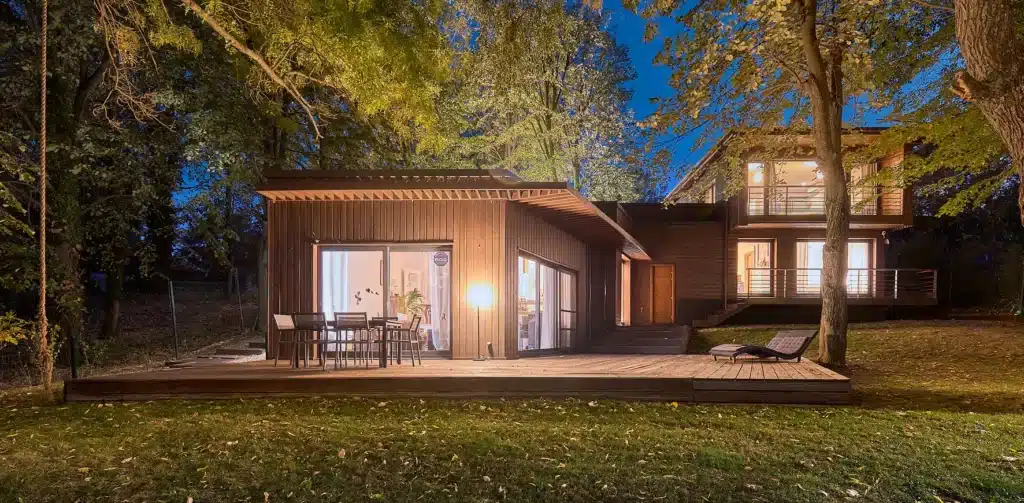
Wood brings lightness, fast construction, and excellent thermal performance. It creates warm, inviting spaces where the natural character of the material is fully expressed.
Stone, brick, and concrete provide thermal mass, strength, and long-term durability, ensuring resilient and lasting buildings. Their presence grounds the building in its surroundings and creates a dialogue with the local landscape and architectural heritage.
Combining these materials makes it possible to design balanced architecture, where each element is used according to its function and contributes to the overall performance of the building.


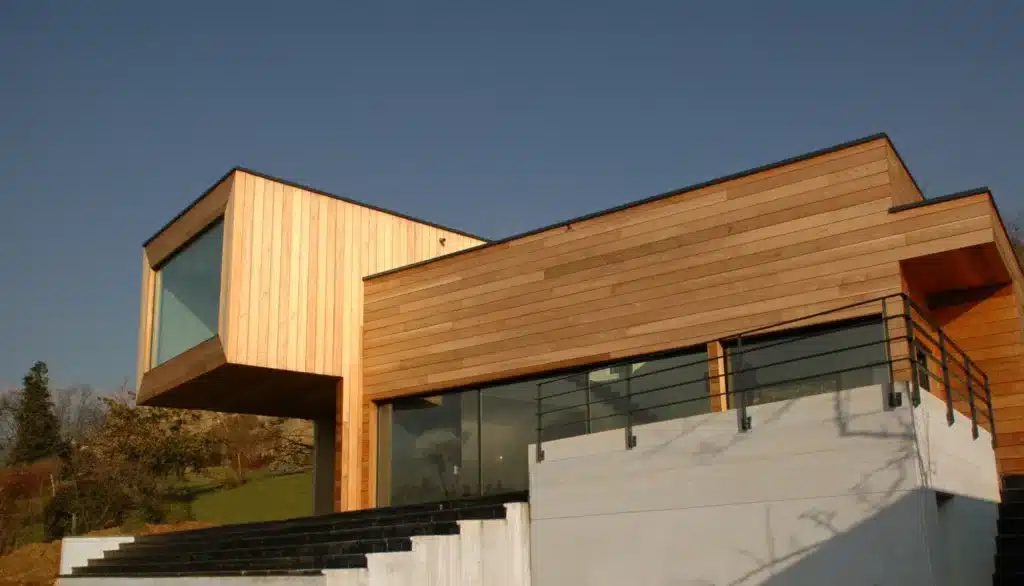
"Materials interact with one another and have the ability to create a unique kind of poetry when brought together."
Peter Zumthor
As architects specializing in mixed-material buildings, we highlight the unique qualities of timber, stone, brick, and concrete. Our approach is to use the right material in the right place, creating architecture that is coherent, high-performing, and carefully adapted to its context.
Every project begins with a dialogue between the site, its intended use, and the materials themselves.


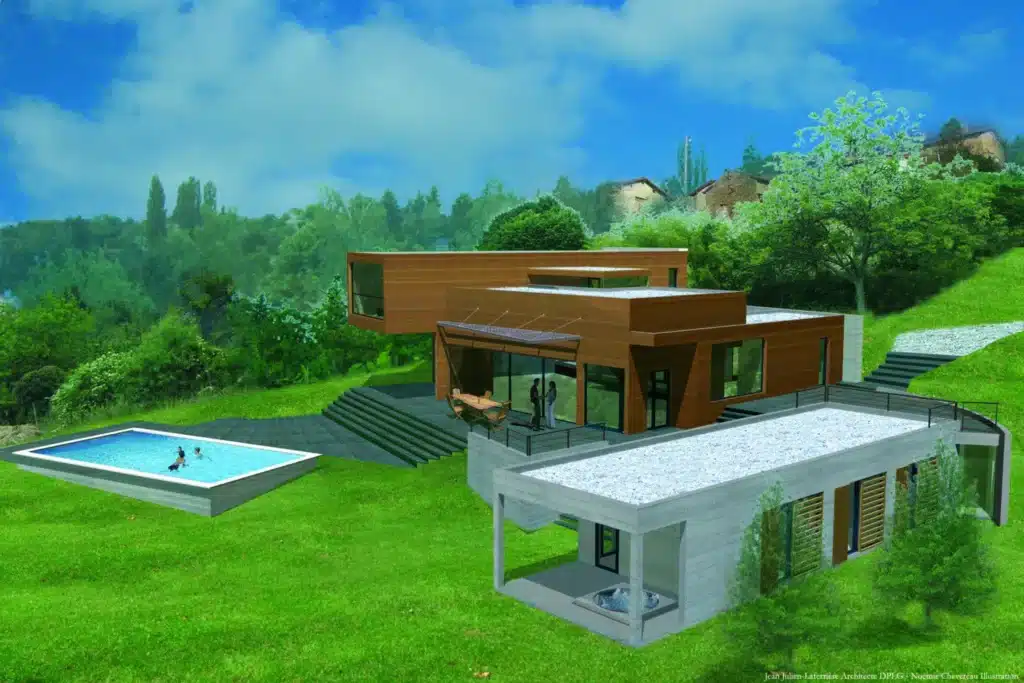
Our flagship mixed-material projects.
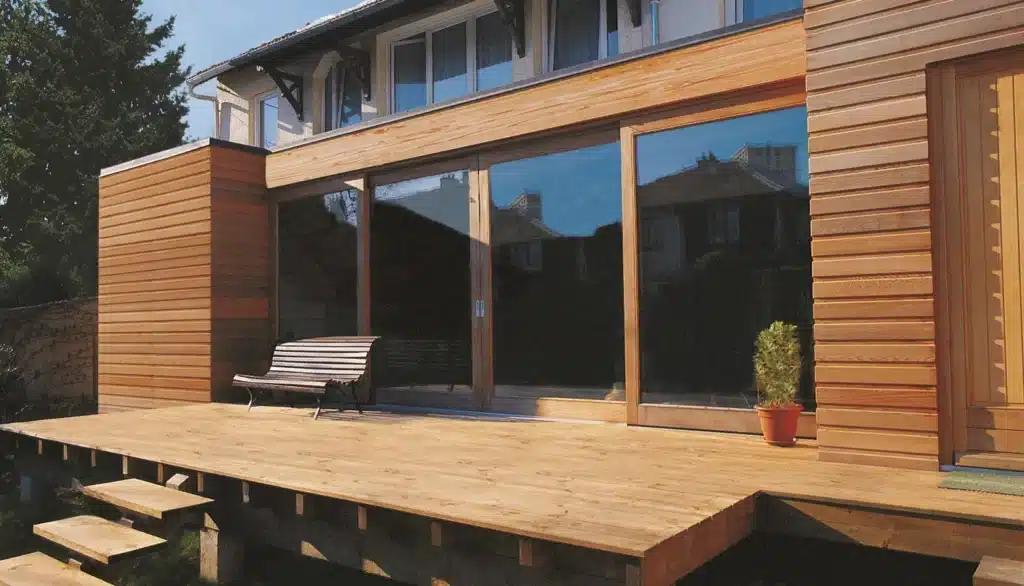

Let's shape sustainable timber-and-masonry architecture together.
Let's combine innovation, craftsmanship, and sustainable materials to design spaces that respect their environment.
LET'S TALK ABOUT YOUR PROJECTMixed timber-masonry construction
Why combine timber with stone, brick, or concrete in the same building?
Combining timber with stone, brick, or concrete allows each material to be used where it performs best. Timber brings warmth, lightness, and excellent environmental performance, while stone, brick, and concrete provide thermal mass, strength, and a strong connection to the site. Together, these materials create rich, balanced contemporary architecture that responds naturally to its surroundings, the site’s topography, and the lifestyle of its occupants.
How do you choose the right material for each part of a home?
There is no single ideal material—only the right material for each purpose. The choice depends on many factors, including architectural intent, technical and environmental performance, site constraints, budget, durability, maintenance requirements, and our clients’ aesthetic preferences. Our role is to guide you toward the best balance between all of these considerations.
Can a timber structure be combined with existing stone walls?
Yes, and it is often one of the most rewarding ways to transform an existing building. Combining a timber frame with existing stone walls preserves the authenticity of the original structure without trying to imitate it or create a pastiche. The dialogue between these two timeless, durable materials results in confident contemporary architecture with a strong and distinctive identity.
Is a hybrid home suitable for challenging sites or heritage settings?
Yes, in many cases. Combining different materials provides tailored solutions to the constraints of the site, the character of the landscape, and heritage requirements. By balancing respect for the existing context with technical performance and contemporary architectural expression, this approach offers exceptional design flexibility and creates projects that integrate seamlessly into their surroundings.
Does using multiple materials make construction more complex?
Not necessarily. When considered from the earliest design stages, combining different materials does not complicate construction—it allows each one to be used where it is most effective. Site conditions often guide these decisions: on sloping sites, for example, concrete is particularly well suited to partially buried structures, while lightweight timber framing is ideal for upper levels. Careful detailing and close coordination between the project team and contractors ensure a coherent, durable, and well-executed building.
Does mixed-material architecture offer greater design freedom?
Yes. Combining different materials gives architects greater freedom to use each one where its architectural, technical, and environmental qualities are most valuable. This approach makes it possible to create unique projects that are carefully tailored to the site, its surroundings, our clients’ expectations, and the desired architectural identity.